
Abstract
This practice-based research documents the early stage of my dimensional knitwear exploration, focusing on the material transition from 100% Lycra prototypes to a more wearable 68% polyester and 32% Elite yarn composition.
The project began with an interest in how traditional rib knitting could move beyond a flat textile surface and become a three-dimensional form through material tension, rib arrangement, and hand-linking techniques. In the first Lycra-based experiments, the strong elasticity of the yarn allowed the knitted structure to twist, contract, and create sculptural volume. However, the same material also created practical limitations: the fabric became heavy, highly restrictive, difficult to scale, and less suitable for everyday wear.
This research therefore explores how the initial sculptural effect could be translated into a more comfortable and market-appropriate textile. By testing a new yarn composition, adjusting rib structures, and reworking the linking method, the project investigates how a flat knitted panel can become dimensional when placed on the body.
This stage of the research does not present a fully digital or computational system. Instead, it establishes the foundation for a longer investigation into 2D-to-3D knitted form, material behavior, and the relationship between textile structure and the body.
1. Research Context: The Beginning of a 2D-to-3D Knit Study
My background in textile design and fashion design has shaped the way I approach knitwear. Rather than treating knitting only as a surface or decorative fabric, I am interested in how knit structures can become spatial, sculptural, and body-responsive.
This project began as an early investigation into whether a traditional rib-knit structure could be developed into a dimensional form. The first experiments were based on strong elastic tension. By combining different rib arrangements and linking sections together manually, the knitted textile began to twist and form an infinity-like structure around the body.
At this stage, the textile was still fundamentally a flat knitted construction. Its three-dimensional quality was activated mainly through the body, tension, and placement. When laid flat, the fabric could still return to a more two-dimensional state; when worn, the structure expanded, twisted, and became dimensional.
This became the foundation for my later research into more self-supporting 3D rib structures.
Part I
Early Experiments in Dimensional Rib Knitting:
From Lycra Prototypes to Elite-Infused Wearable Structures
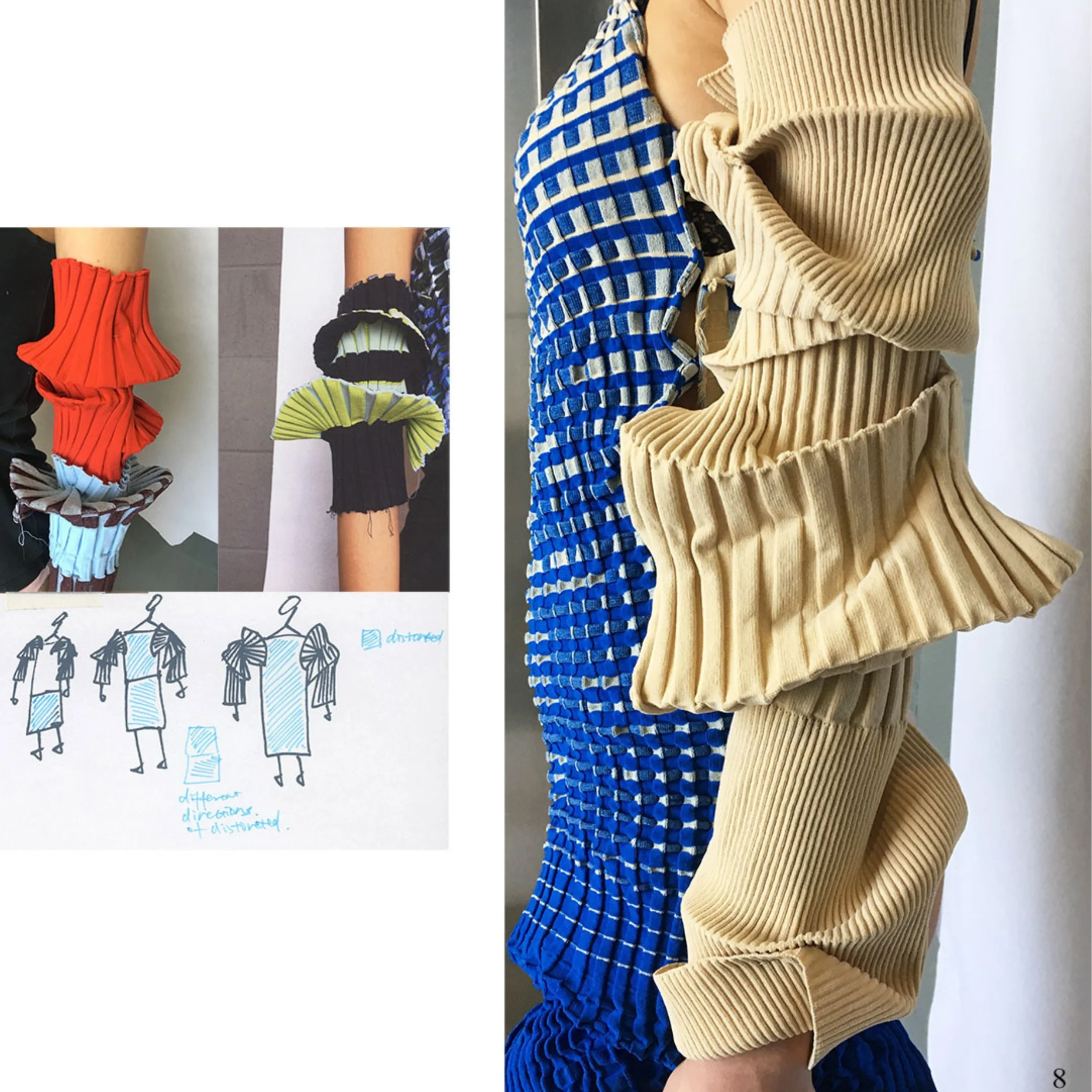
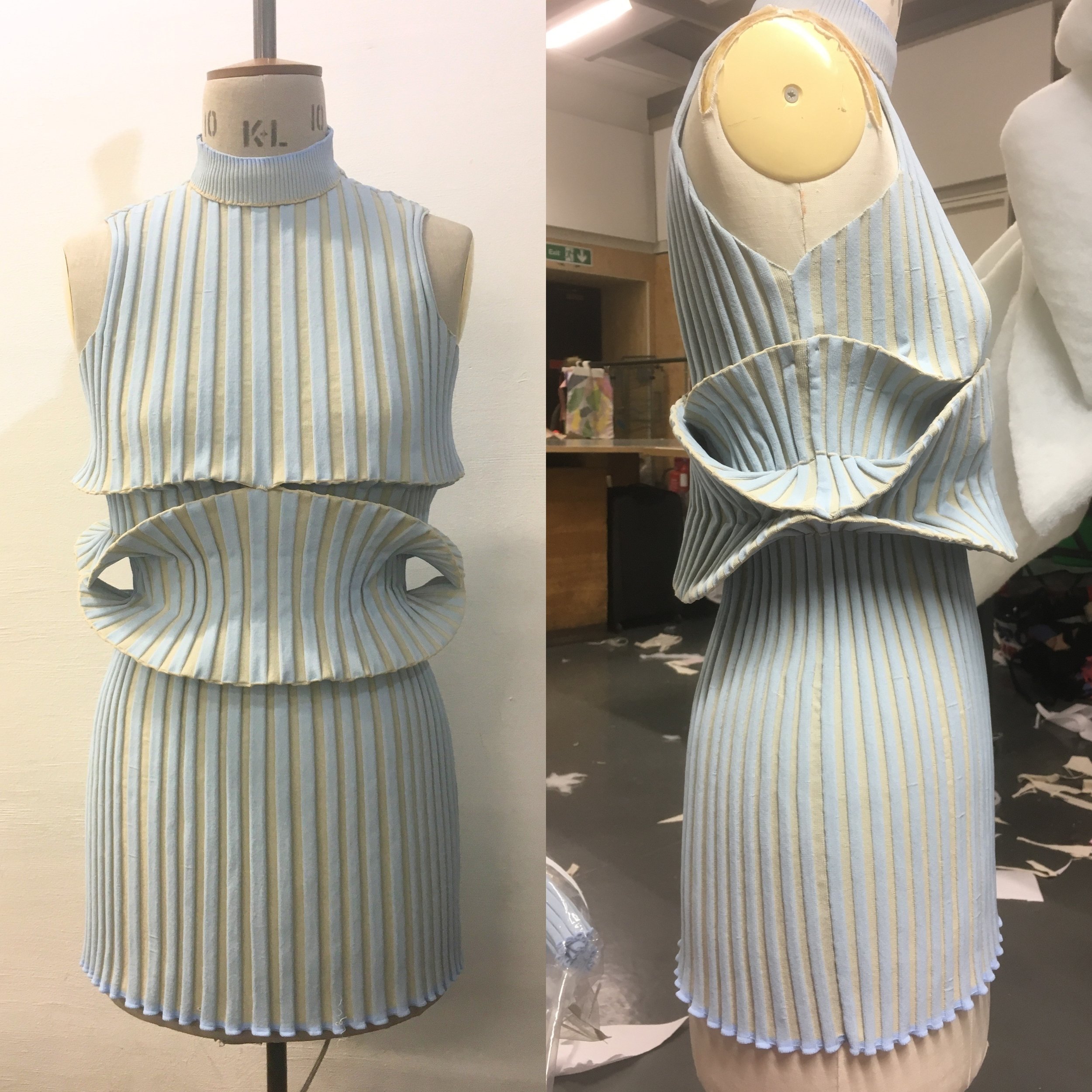
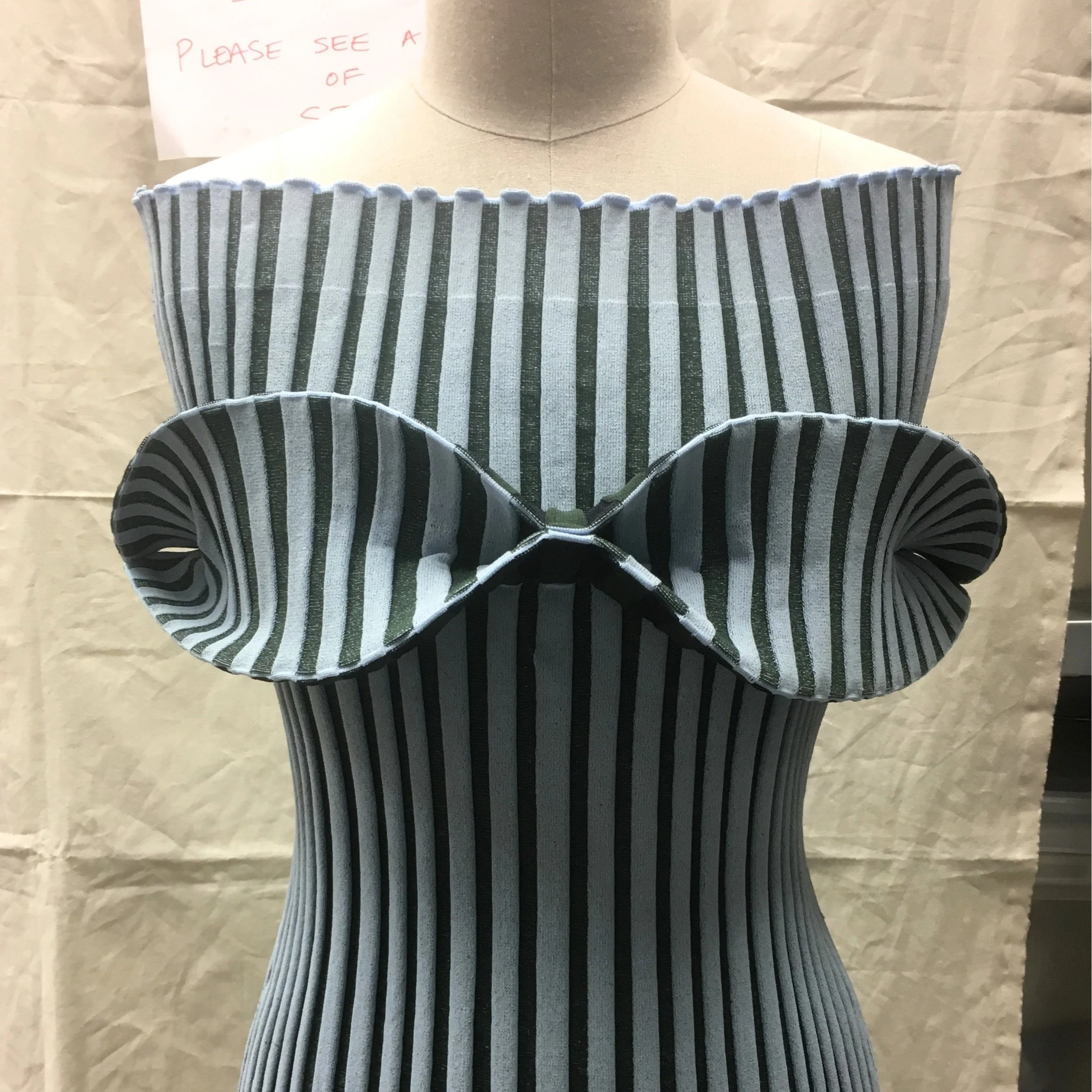
Figure 1.1: Preliminary Tension and Feeder Variations
Exploratory sample demonstrating localized torque through alternating rib configurations and multi-ply feeder adjustments to force flat textiles into initial volumetric shapes.
Figure 1.2: Prototype Alpha: Complex Inversion Hems
Early geometric formulation of the (∞) -loop topology via 100% Lycra. Employs aggressive internal folding planes to maximize spatial architecture.
Figure 1.3: Empirical Constraint: The 440-Needle Limit
Visual evidence of the full-bed bottleneck on a 12-gauge Dubied frame. High-tension 100% Lycra causes extreme shrinkage, compressing fabric width to a mere 30 cm.
2. The Lycra Prototype: Sculptural Potential and Material Limits
The first stage of the project used 100% Lycra because of its strong elasticity and ability to create tension. This material made it possible to test exaggerated volume, compression, and twisting effects. It helped me understand how rib structures could behave when pushed beyond their usual function.
However, the Lycra prototype also revealed several limitations.
Although the material created a strong sculptural effect, it was not comfortable enough for wider wear. The fabric felt dense and restrictive, and the structure depended heavily on high tension. This made the piece difficult to scale, difficult to reproduce consistently, and difficult to translate into a more wearable product.
The material also limited the width and flexibility of the knitted panel. The strong contraction of Lycra reduced the usable textile area and made the final structure more like a localized sculptural garment component than a flexible ready-to-wear textile.
These limitations became an important turning point in the research. Instead of continuing to rely on extreme elasticity, I began to ask how the same dimensional intention could be developed through a more wearable material and a more adaptable construction method.
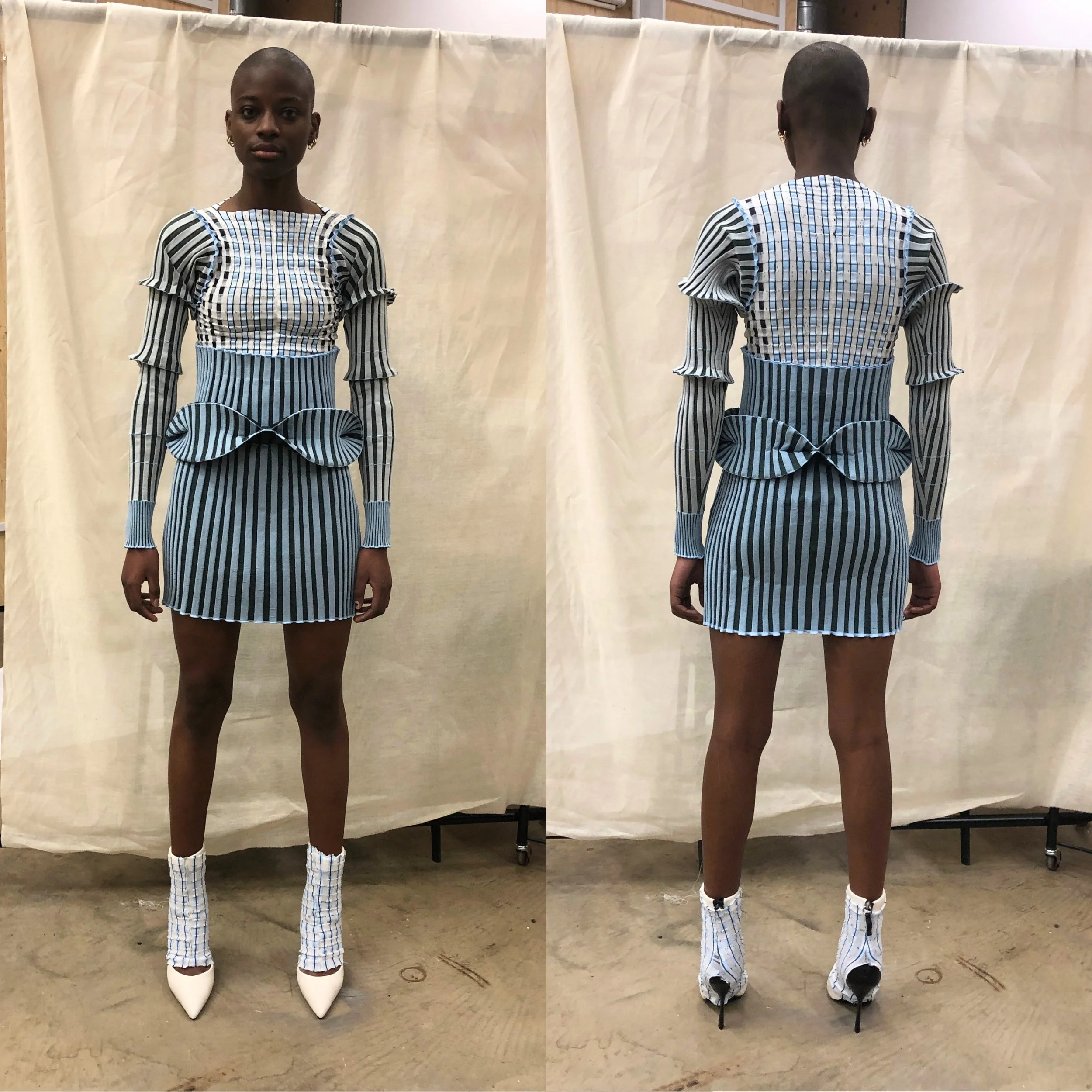
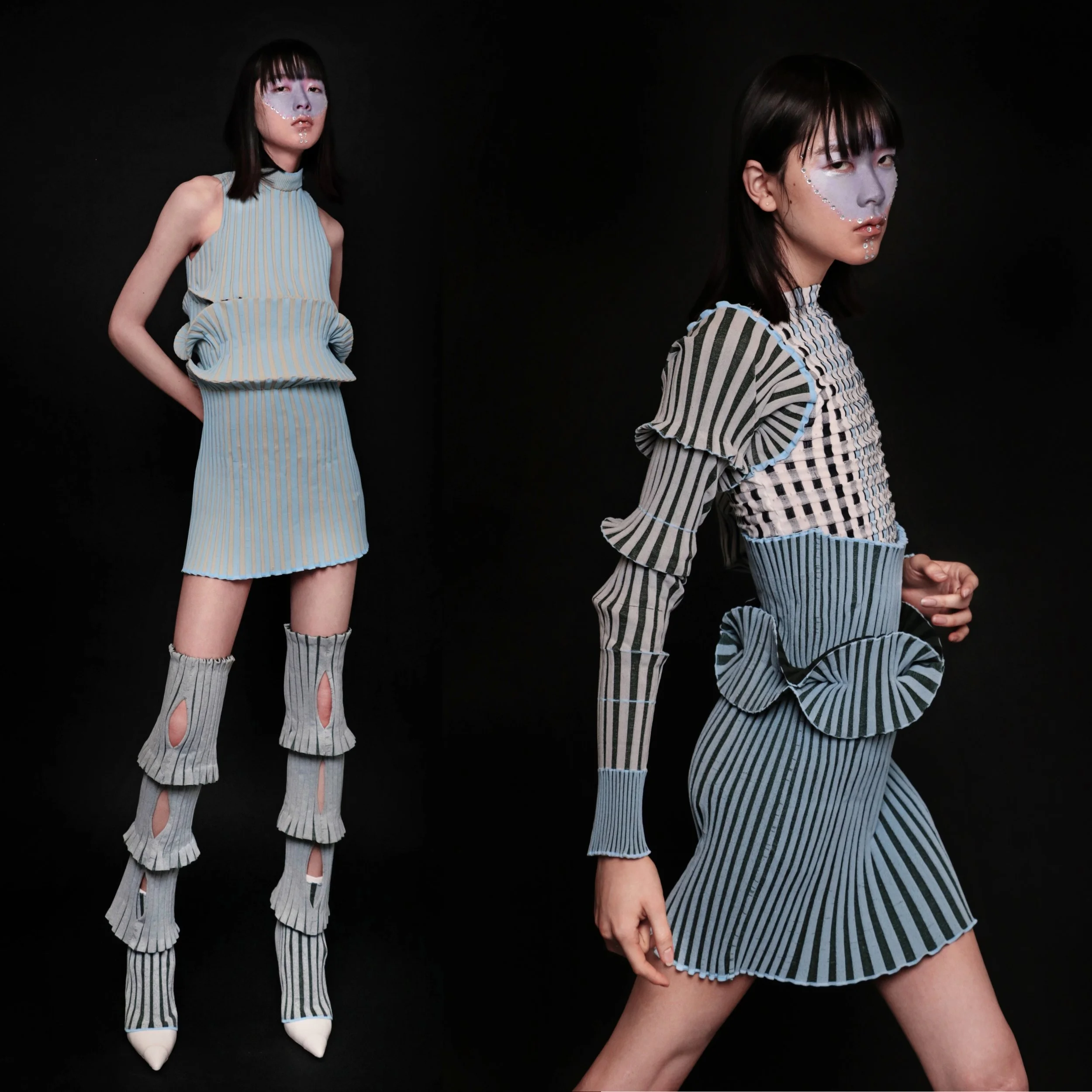
Figure 2.1: Anatomical Fitting: Lumbar Stabilization,MA 2019 Concept Lookbook: The Lycra Era
Live fitting session utilizing the 100% Lycra primitive geometry as a localized structural skirt panel, stabilized around the waist via manual linking craft.Final conceptual lookbook featuring initial thesis iterations. Establishes the foundational methodology of parameterizing textile torque for structural volume generation.
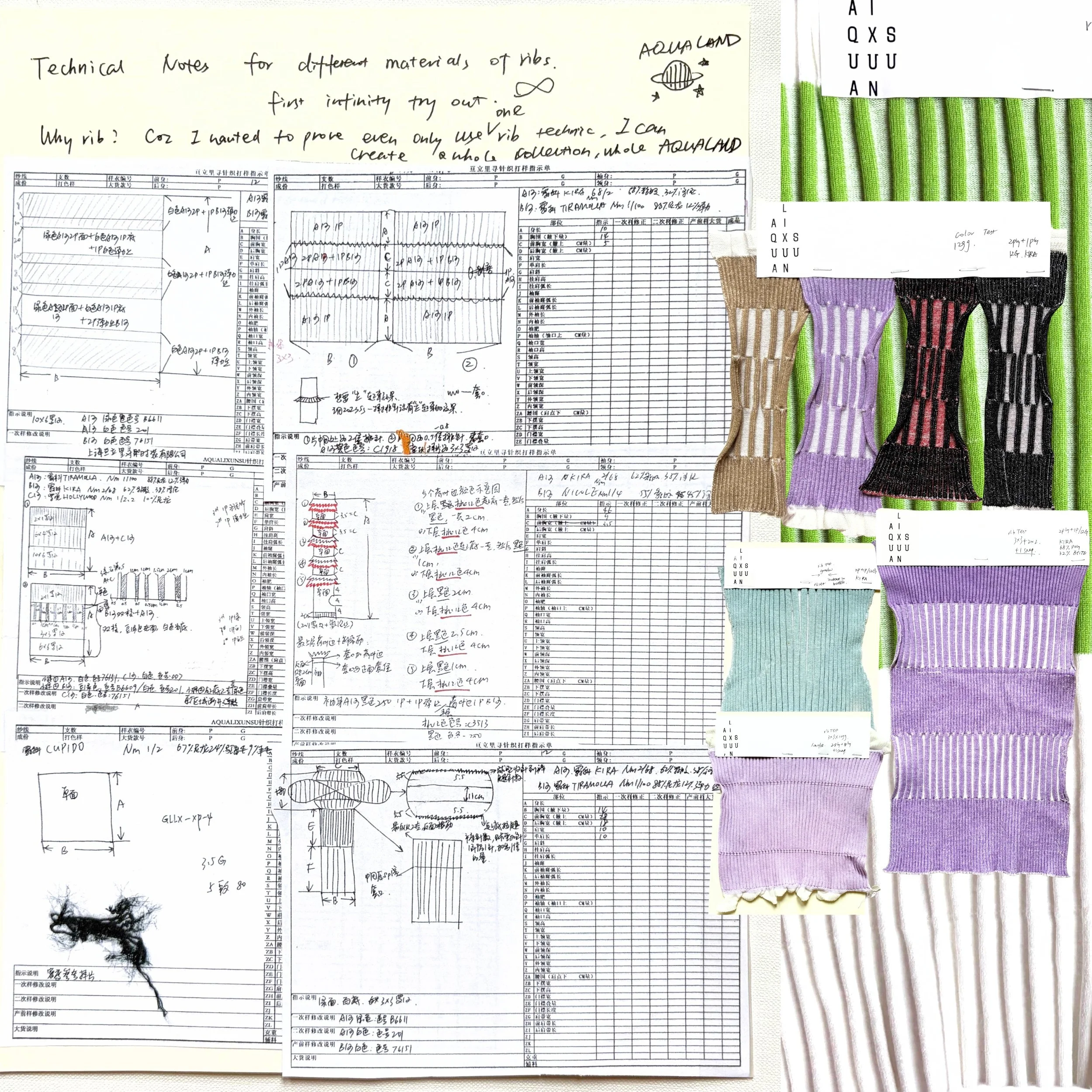
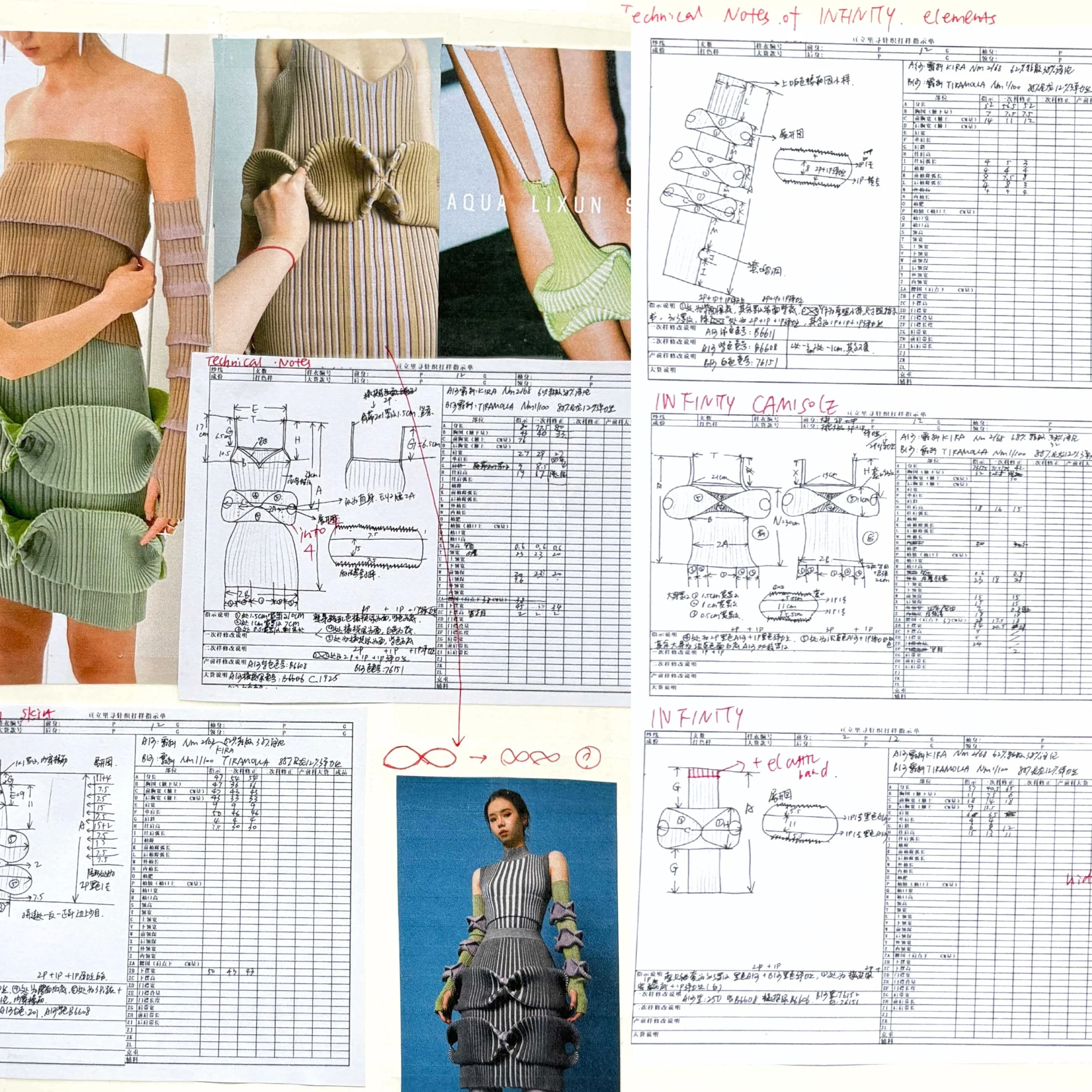
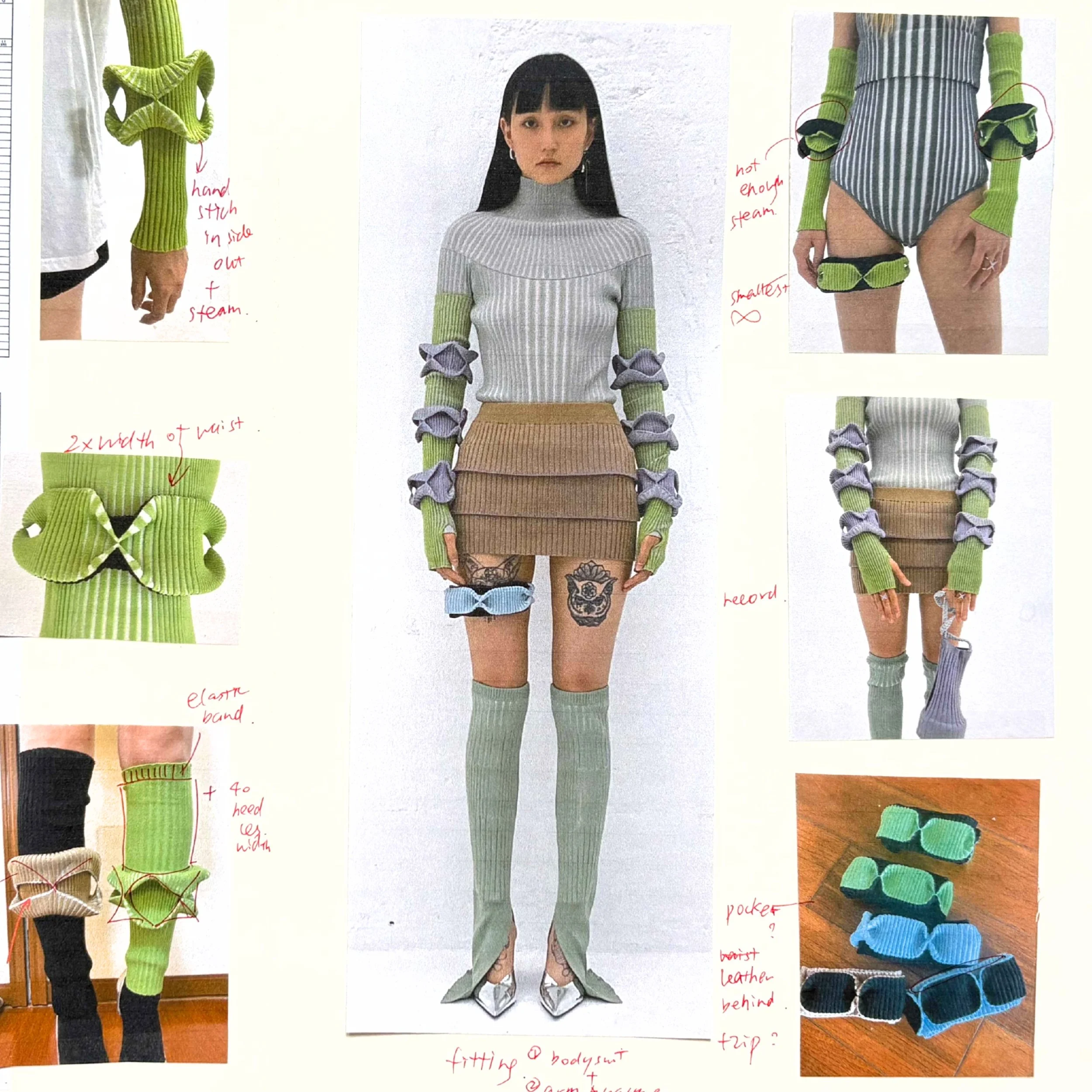
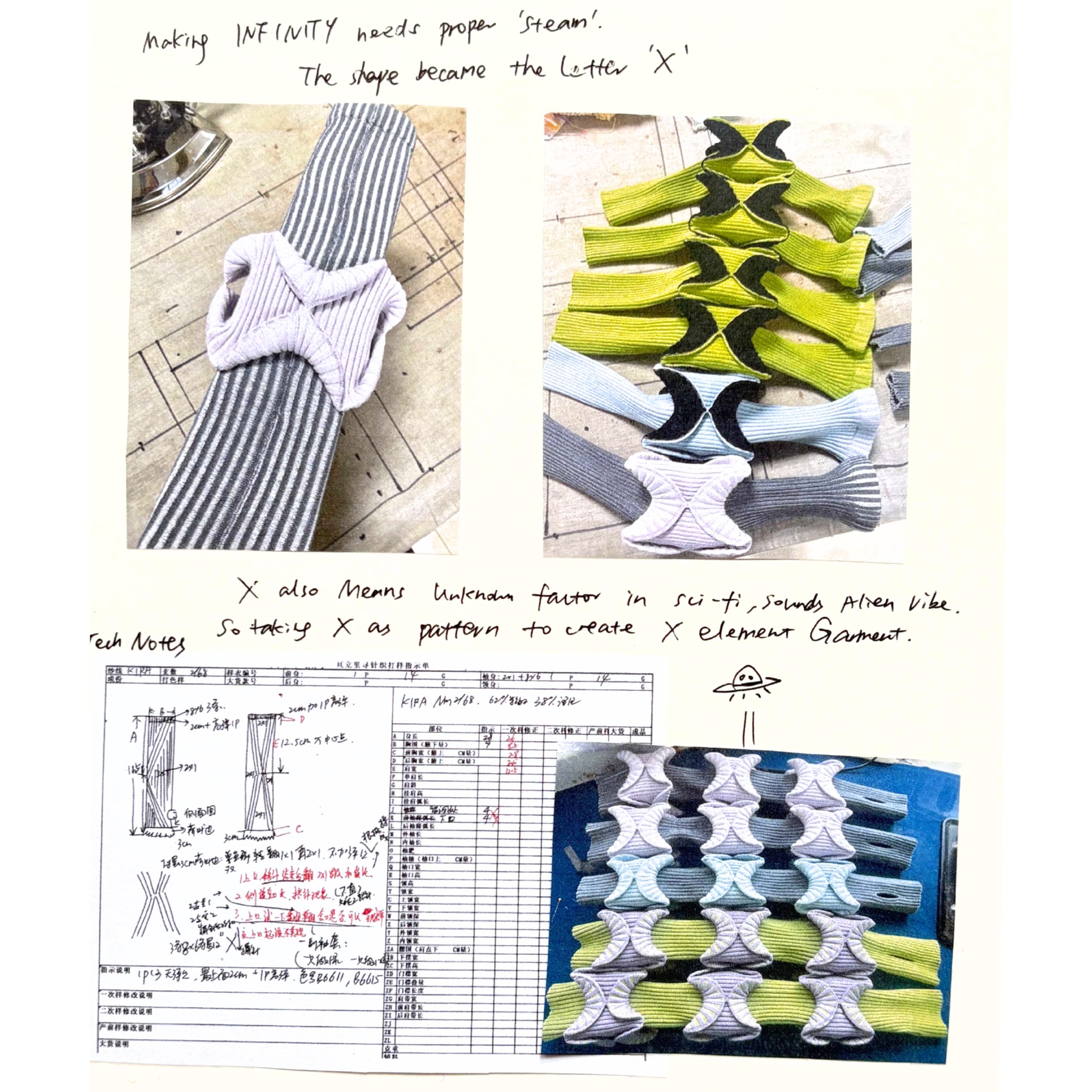
Figure 3.1: Material Exploration via Needle Arrangement,Parametric Scaling via Anatomical Dimensions
Technical notes charting variable ribbing methodologies (including 2x2, 3x3, and 5x2 needle setups) to map foundational material tension profiles before volumetric scaling.Design documentation illustrating the Proportional Scaling Algorithm. Translates raw (∞)-loop topology calculations into distinct multipliers relative to localized bodily circumferences.
Figure 3.2: Post-Knitting Standardization: High-Pressure Steam Control
Empirical tracking of the post-setting phase. Establishes exact thermal holding times and high-pressure steam metrics to lock structural nodes and guarantee batch consistency.
Figure 3.3: Systemic Anatomical Mapping & Placement Trials
Comprehensive fitting trials demonstrating the geometric migration of self-supporting structures across diverse bodily landscapes, testing structural limits on varying kinetic zones.
3. Material Transition: From Lycra to 68% Polyester / 32% Elite
The next stage of the project focused on translating the Lycra-based structure into a more skin-friendly and commercially realistic yarn composition: 68% polyester and 32% Elite.
This material shift changed the behavior of the textile. Compared with 100% Lycra, the new yarn had less aggressive contraction, a softer hand feel, and better potential for wearable garments. However, because it did not create the same level of elastic force, the dimensional form could no longer depend only on stretch.
As a result, the design process became more structural. I needed to reconsider the rib arrangement, the scale of the knitted panels, the direction of linking, and the way each section interacted with the body.
This transition was important because it moved the project from a purely experimental sculptural sample toward a more practical textile system. The goal was not to remove the experimental quality of the work, but to make the structure more comfortable, repeatable, and suitable for future development.

Figure 4.1: Iteration V.1: The Prototypical Detachable Sleeve
Material execution of the finalized Elite-infused prototypical sleeve. Validates the structural transition from a static 2D plane into an autonomous 3D volumetric ornament.
4. Rib Structure, Linking, and Body Placement
The main technical focus of this stage was the relationship between rib structure, material tension, and body placement.
Different rib configurations were tested to understand how they affected stretch, density, contraction, and volume. Wider and narrower rib sections created different levels of tension. When these sections were linked together, the textile began to respond differently across the body.
The hand-linking process was especially important. Rather than treating the knitted panel as one continuous flat surface, linking allowed separate areas to be joined, redirected, and shaped. This helped the textile move from a flat construction into a more dimensional garment form.
At this stage, the body played an essential role. The structure became three-dimensional through wearing, movement, and placement. The dimensional effect was not yet fully self-supporting when the textile was placed independently, but the garment demonstrated how rib structures could create volume when activated by the body.
5. From Sculptural Sample to Wearable Possibility
This research stage helped me understand the difference between a sculptural textile experiment and a wearable knitwear system.
The Lycra version proved that rib knitting could generate strong dimensional effects, but it also showed that visual impact alone was not enough. For the work to develop further, the textile needed to become lighter, softer, more adaptable, and more suitable for real use.
The Elite-infused version became a bridge between experimentation and wearability. It allowed the structure to retain a sense of volume while becoming more comfortable and more practical. This opened up the possibility of applying the same knit logic to sleeves, hems, detachable components, and other garment areas.
This stage therefore became an important foundation for the later development of more independent three-dimensional rib structures.
6. Position Within the Ongoing Research
This project should be understood as the first stage of a longer investigation into dimensional knitwear.
In this early stage, the key discovery was that a flat knitted textile could become three-dimensional through the relationship between rib structure, material behavior, hand-linking, and the body. The work was still garment-based and body-activated: the textile appeared more two-dimensional when placed flat, and became three-dimensional when worn.
The next stage of the research develops this idea further. Instead of relying only on the body to activate the form, the later experiments explore how rib arrangement, material combinations, and proportional construction logic can allow the textile to hold a three-dimensional shape even when placed independently.
Together, these two stages form a gradual research progression:
from elastic sculptural testing,
to wearable material translation,
to more self-supporting dimensional knit structures.
This ongoing research reflects my interest in how traditional knit knowledge can be expanded through material testing, structural thinking, and future digital evaluation. Rather than beginning with advanced technology, the work begins with hands-on textile experimentation. In future doctoral research, I hope to study how these material-led knit structures could be further evaluated through body-centered design, digital fitting tools, and sustainable product development.
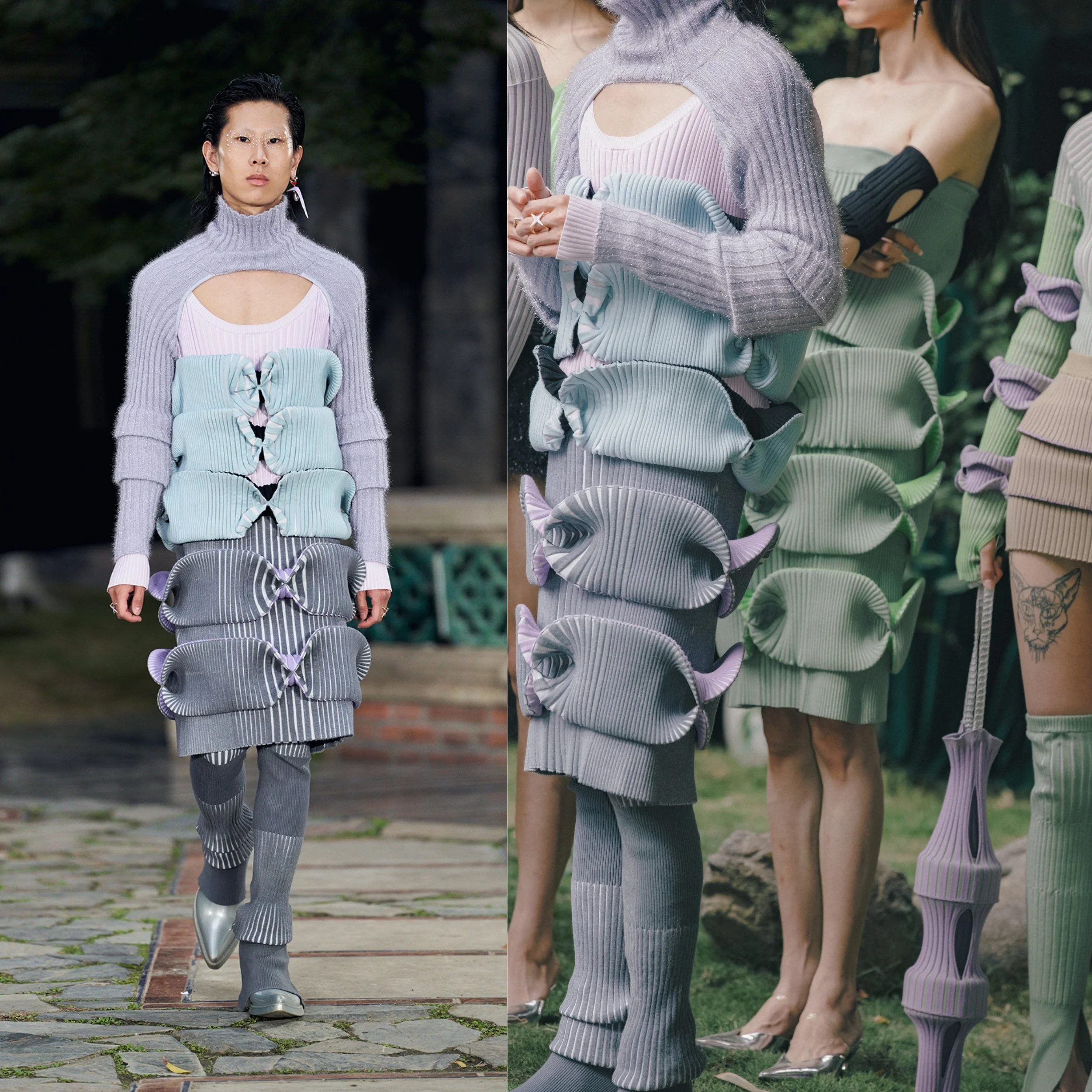
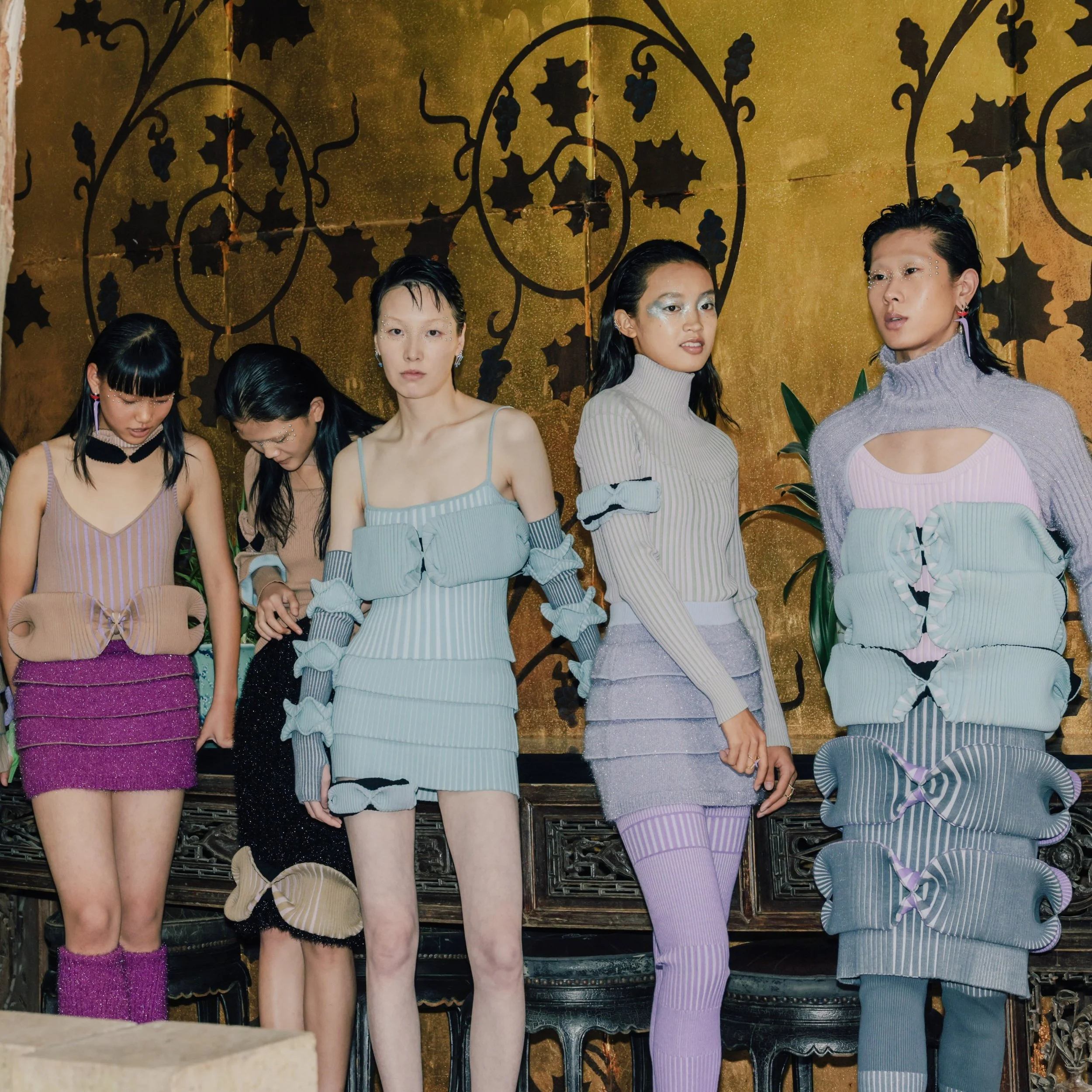
Figure 6.1 & 6.2: Runway Debuts: Industrialized Ready-to-Wear Execution,Macro Details: Volumetric Proliferation Across the CollectionDetailed collection overview capturing the multi-textural evolution of the topological algorithm, translated seamlessly across diverse silhouettes, weights, and industrial density profiles.Runway presentation showcasing the industrialized 68% Poly / 32% Elite commercial garments. Demonstrates the adaptive fluidity of the (∞) -loop architecture under dynamic movement.