
Abstract
EBE-AQUA Original is a practice-based knitwear research project that investigates how traditional rib structures can be developed from flat knitted surfaces into dimensional, body-responsive forms. As the second stage of my ongoing 2D-to-3D knit research, the project builds on earlier experiments with Lycra and Elite-infused yarns, shifting from body-activated dimensionality toward more self-supporting textile structures.
Through multi-rib linking, material contrast, stitch variation, and proportional construction, the project examines how knitted textiles can generate volume through their own internal structure. Rather than presenting the work as a digital or computational system, this research is grounded in hands-on knit development, material observation, and craft-based textile knowledge, with future potential for body-centered design, sustainable product development, and digital evaluation.
Part II
Material-Led 3D Rib Structures:
‘EBE-AQUA’ Original and Multi-Rib Knit Construction
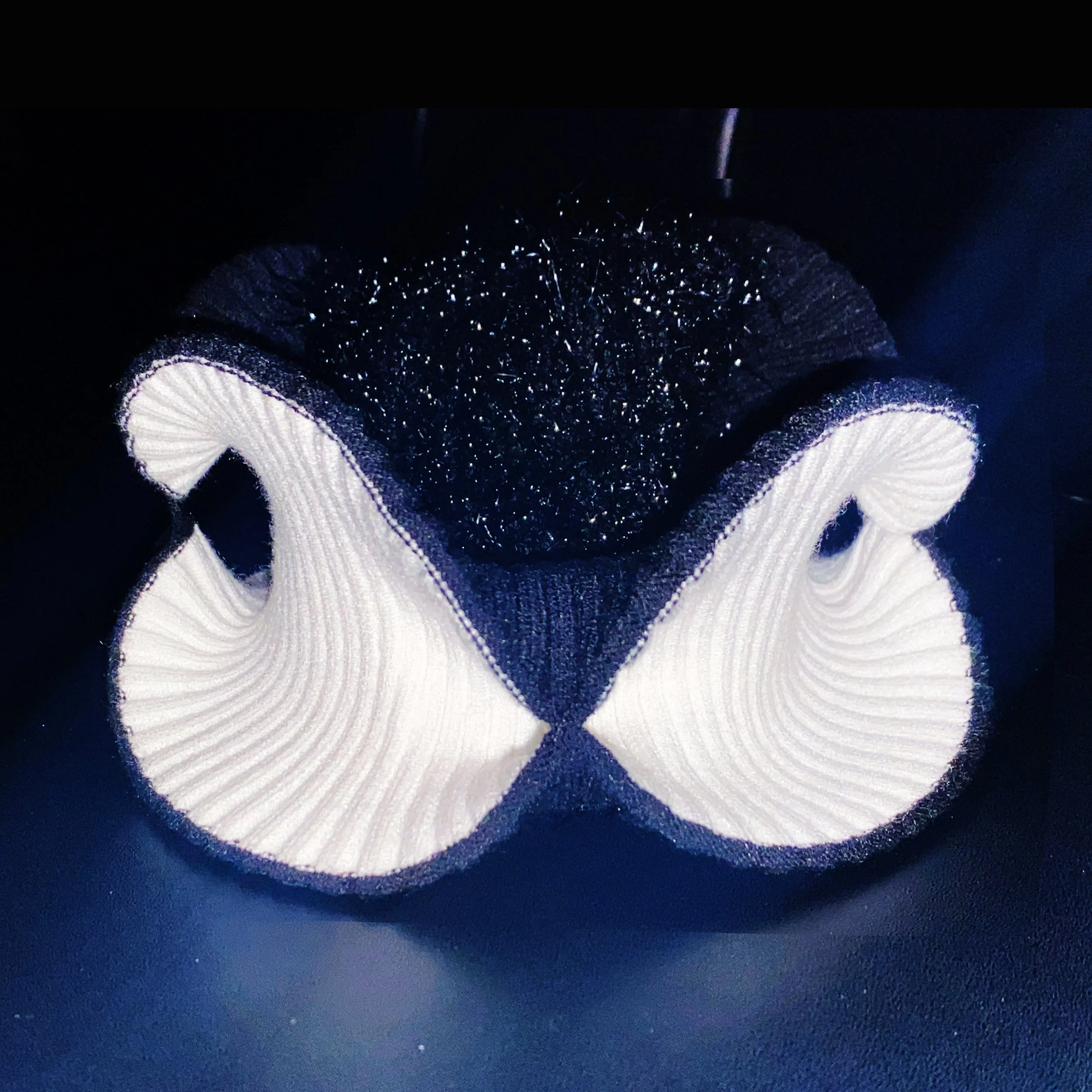
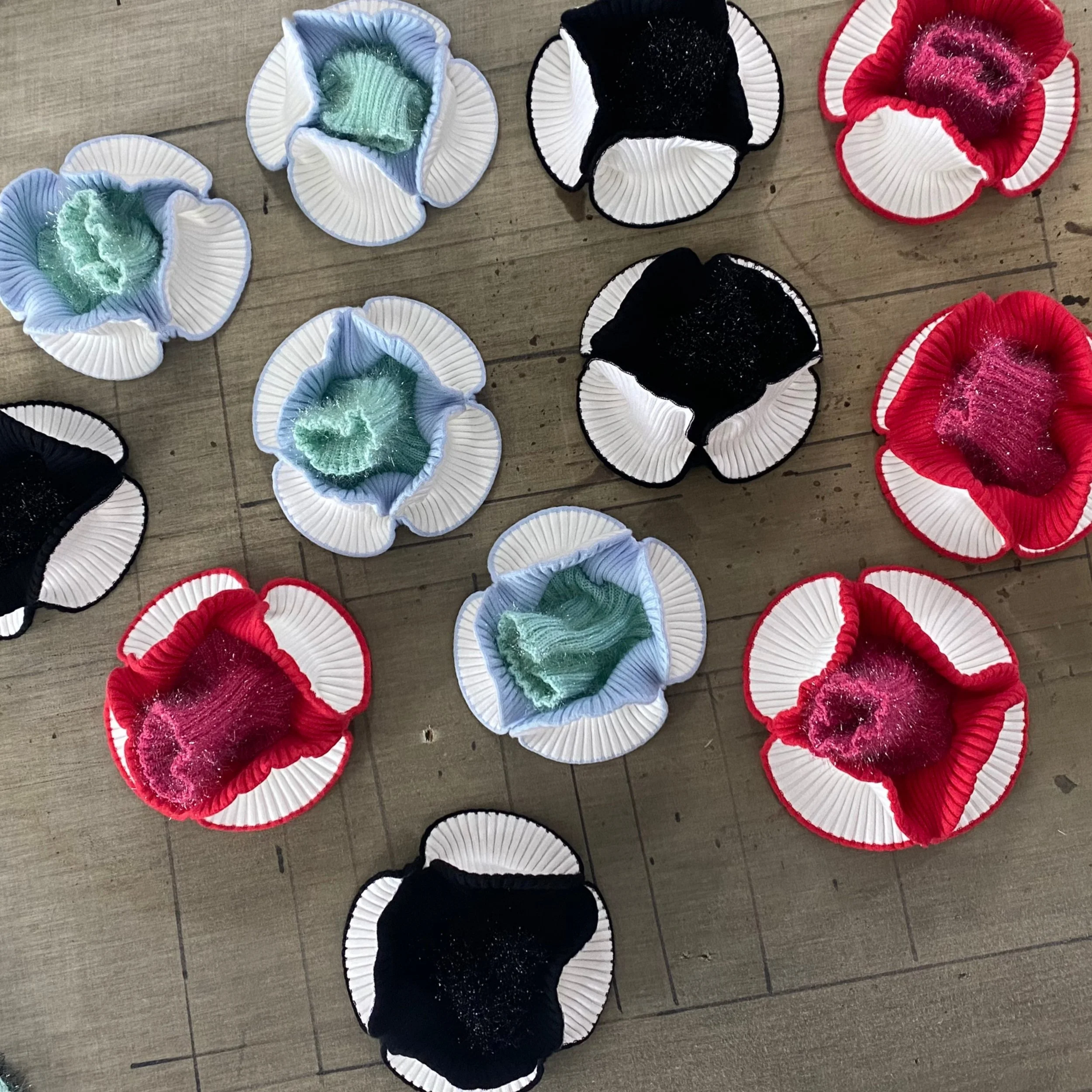
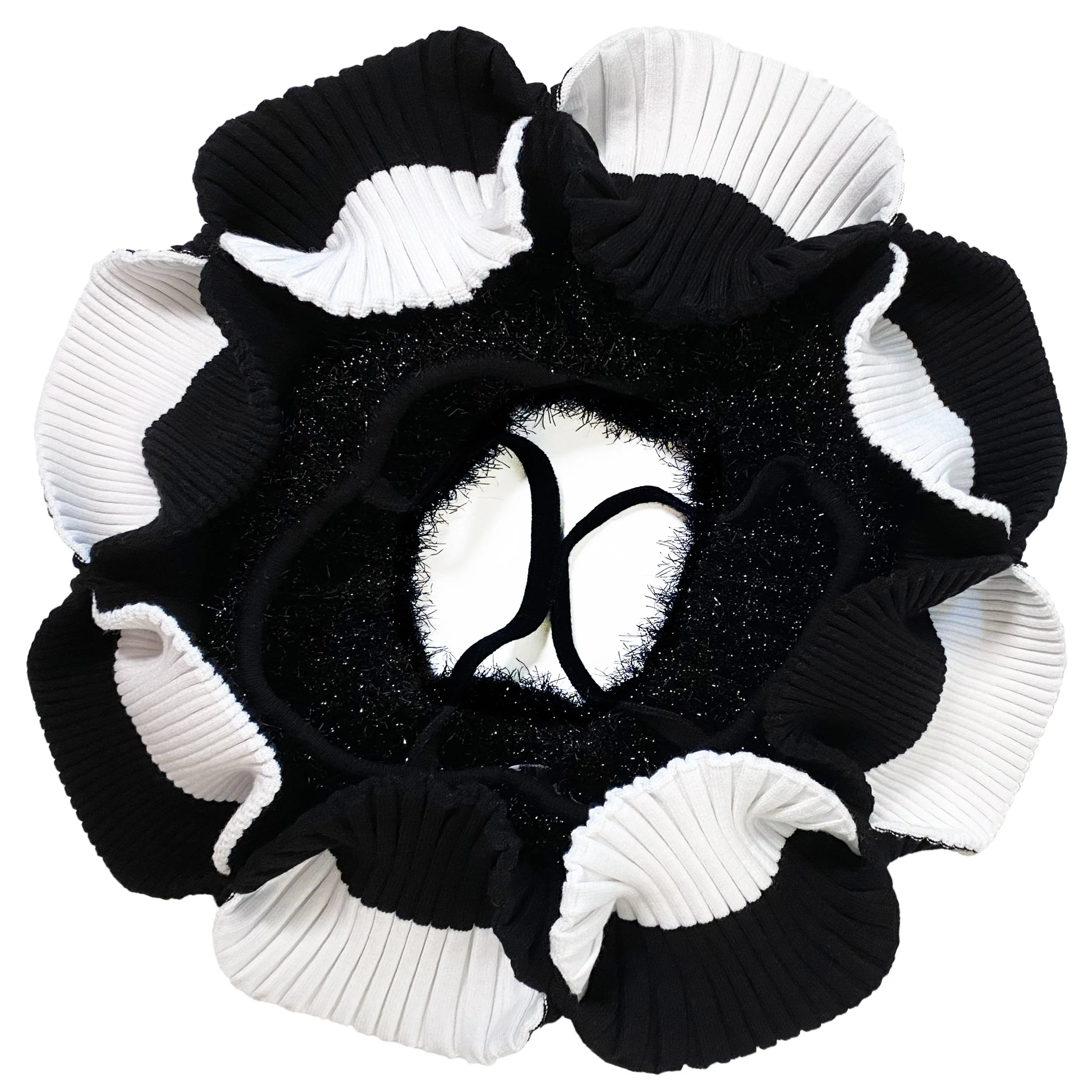
The early prototype studies, shown in Figures 1.1 and 1.2, demonstrate how multi-rib construction, linked edges, and contrasting yarn behaviors allow the knitted textile units to fold, curl, and hold volume independently.
1. EBE-AQUA Original: From Modular Sample to Dimensional Form
EBE-AQUA Original explores how a knitted textile can move beyond a flat surface and begin to behave as a dimensional structure. The project investigates how rib arrangement, material contrast, linking methods, and proportional changes can allow the textile itself to hold volume more independently, rather than becoming three-dimensional only when worn.
The project develops from my earlier “Infinity” knit experiments, which examined the transition from 100% Lycra to a more wearable 68% polyester and 32% Elite yarn composition. In that earlier stage, the knitted structure relied heavily on elasticity, body placement, and movement to activate its sculptural form. EBE-AQUA Original takes this research further by shifting the focus from material stretch alone to the internal structure of the knit itself.
3. Object-Based Application and Future Research Direction
Beyond wearable prototypes, EBE-AQUA Original also explores how the same multi-rib construction logic can be extended into object-based and installation contexts. By placing the knitted structure around non-body forms, such as botanical stems and glass objects, the project tests how rib units can frame, support, and interact with existing objects while retaining their own dimensional behavior.
These installation studies suggest that the technique is not limited to garments. The rib-linked structures can operate as soft modular components that wrap, hold, frame, or transform an object. In this context, knitwear is no longer understood only as clothing, but as a flexible material system that can move between body, object, surface, and space.
This direction opens up broader possibilities for material-led product design, soft interior structures, accessories, and textile-based installations. It also connects to sustainability by considering how one construction logic can be adapted across different scales and uses, rather than being limited to a single garment outcome.
Future research could further examine how these dimensional knit structures respond to different forms, weights, and spatial conditions. Digital tools such as 3D scanning, virtual fitting, or form analysis could potentially support this process by helping evaluate scale, placement, and structural behavior. However, the foundation of the research remains hands-on knit construction, material experimentation, and craft-based textile knowledge.
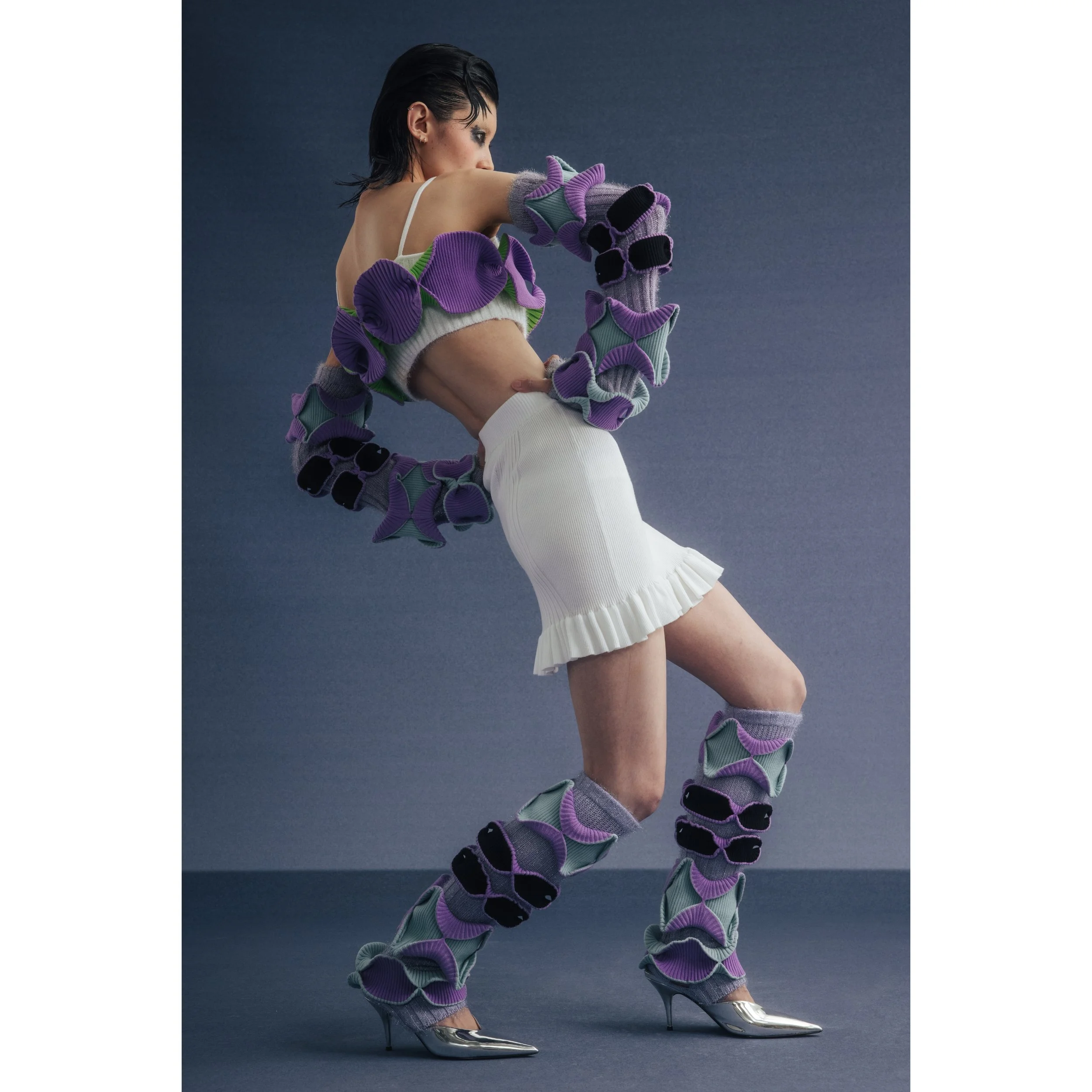
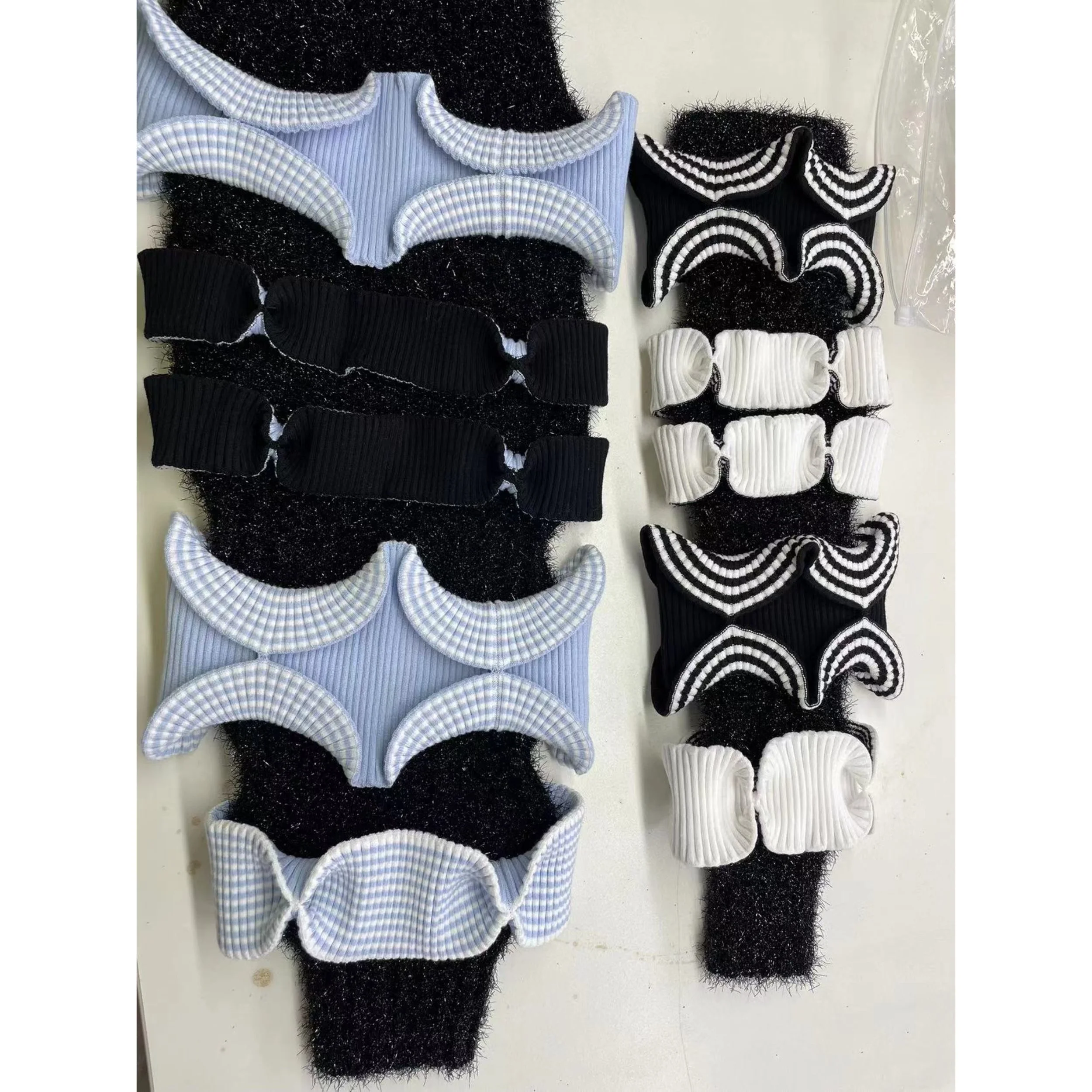
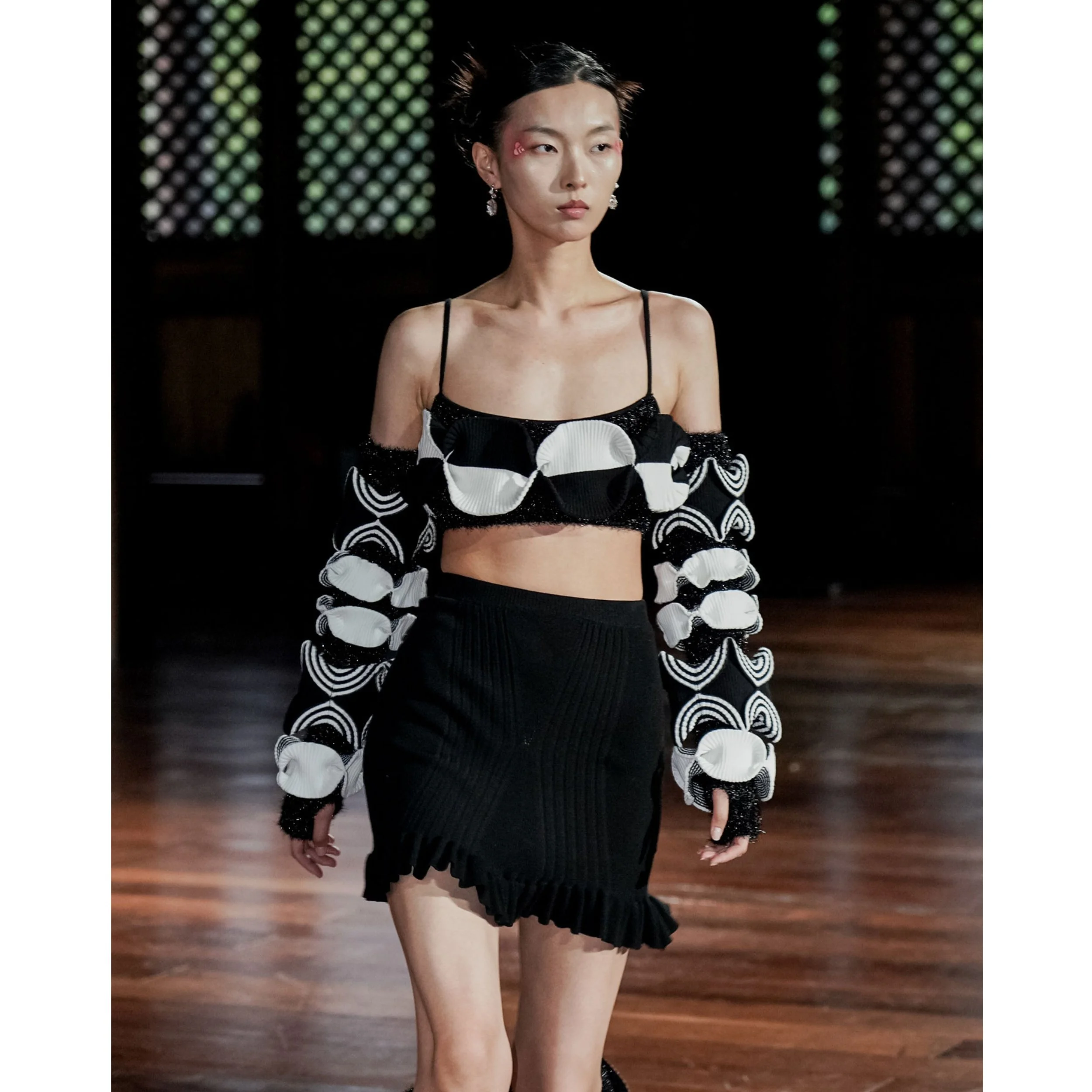
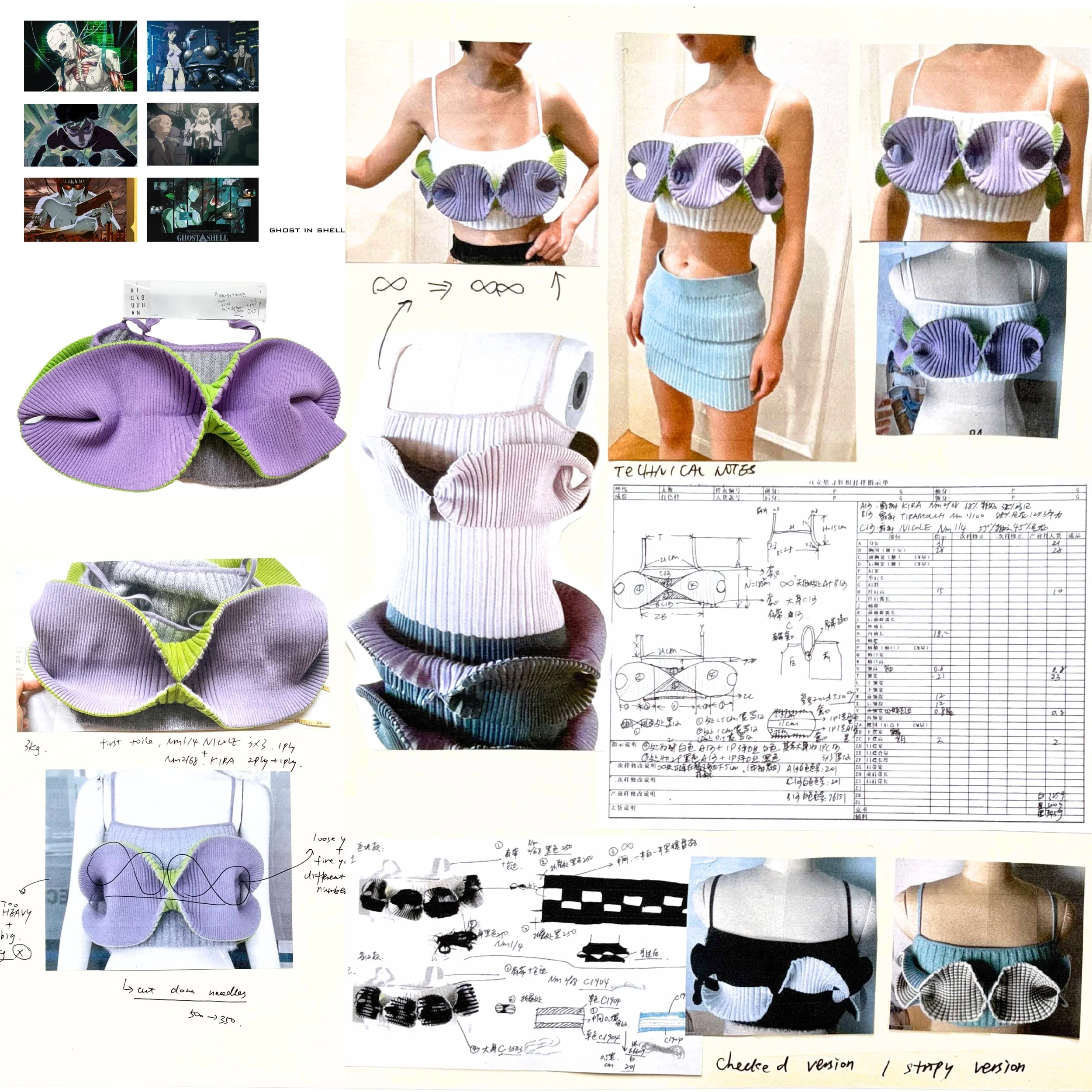
Figure 2.1. Research board documenting the early translation of EBE-AQUA Original from modular rib samples to bust-based placement studies, including visual references, fitting tests, technical notes, and proportional construction planning.
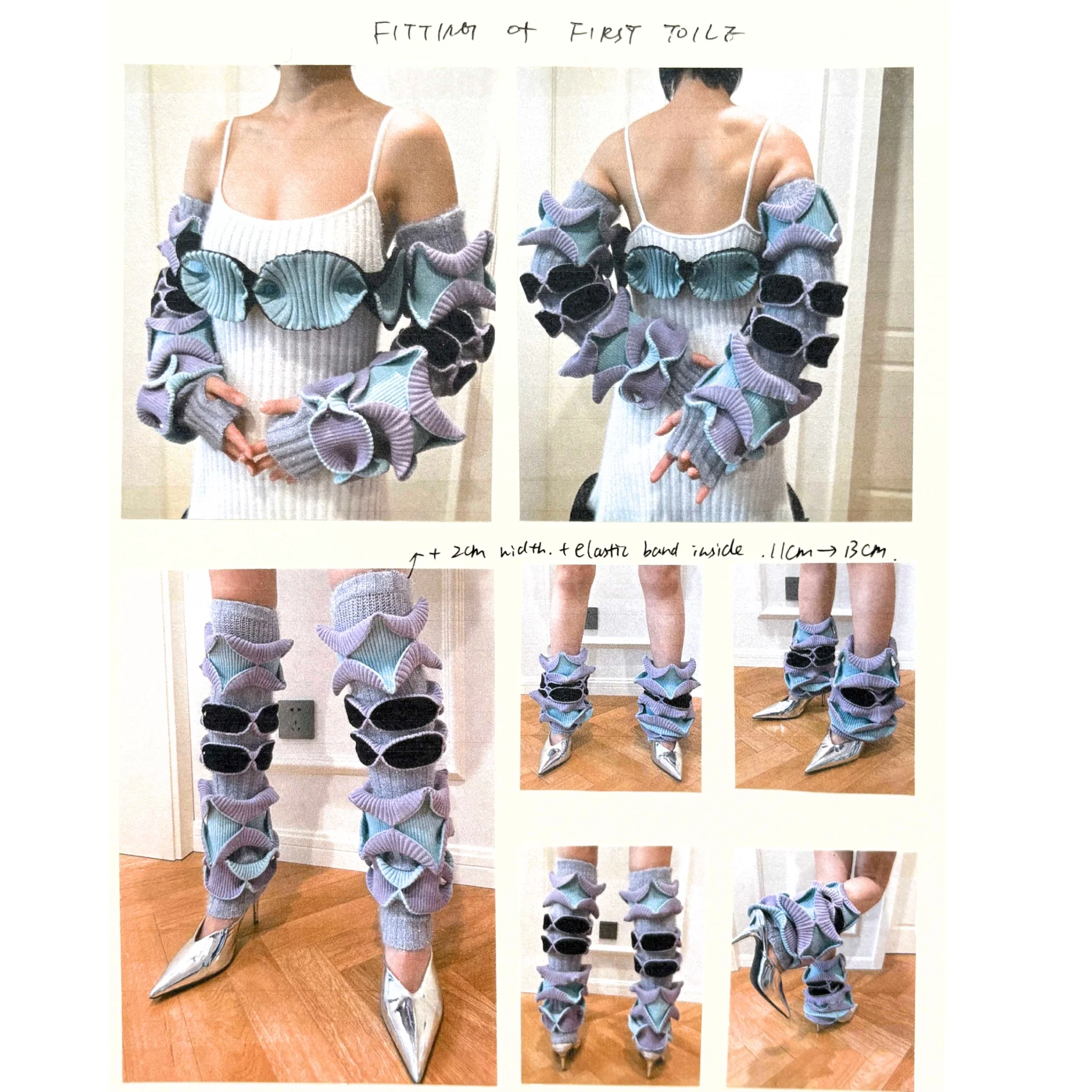
Figure 2.2. First toile fitting of the EBE-AQUA bust, sleevelet, and leg components, testing scale, placement, mobility, and the relationship between repeated rib units and the body.
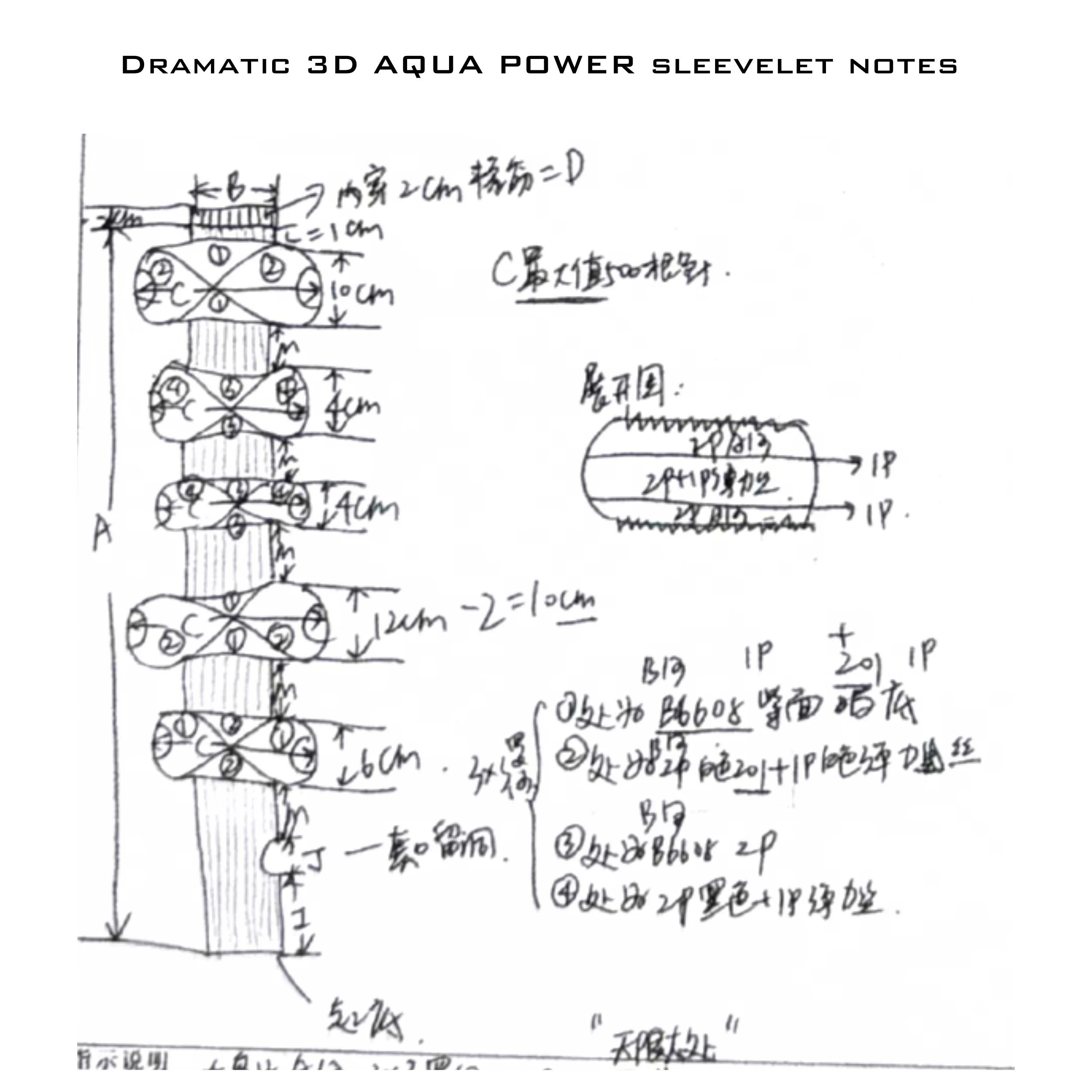
Figure 2.3. Technical notes for the EBE-AQUA sleevelet construction, mapping repeated unit placement, proportional measurements, linking direction, and material distribution.
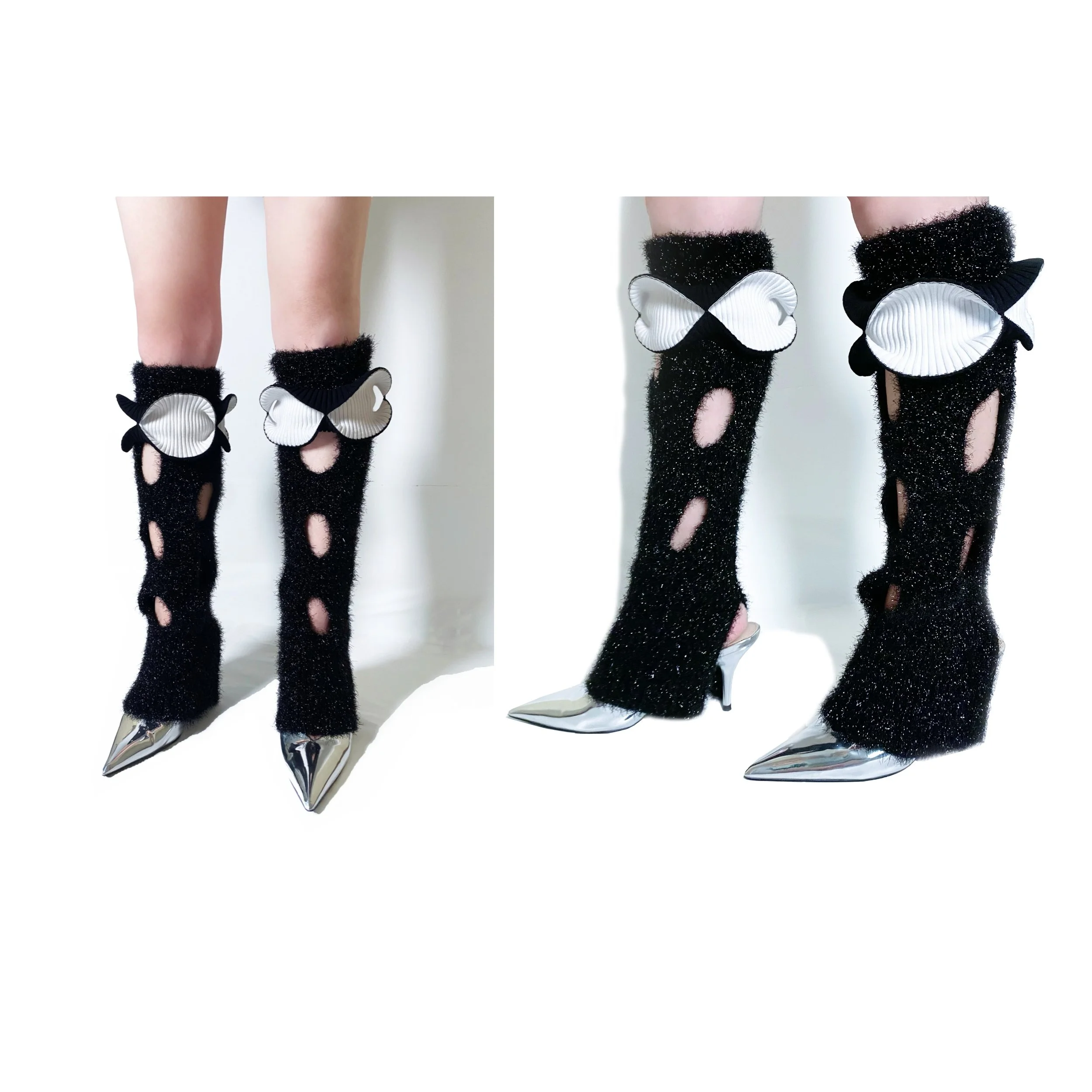
Figure 2.4. Wearable leg prototype developed from the EBE-AQUA multi-rib construction logic, testing dimensional placement, surface openings, and structural contrast around the lower body.
Figure 2.5. Top-view structural study showing how repeated black-and-white rib units can be linked around a body-related opening, allowing the textile to hold volume as a soft modular structure.
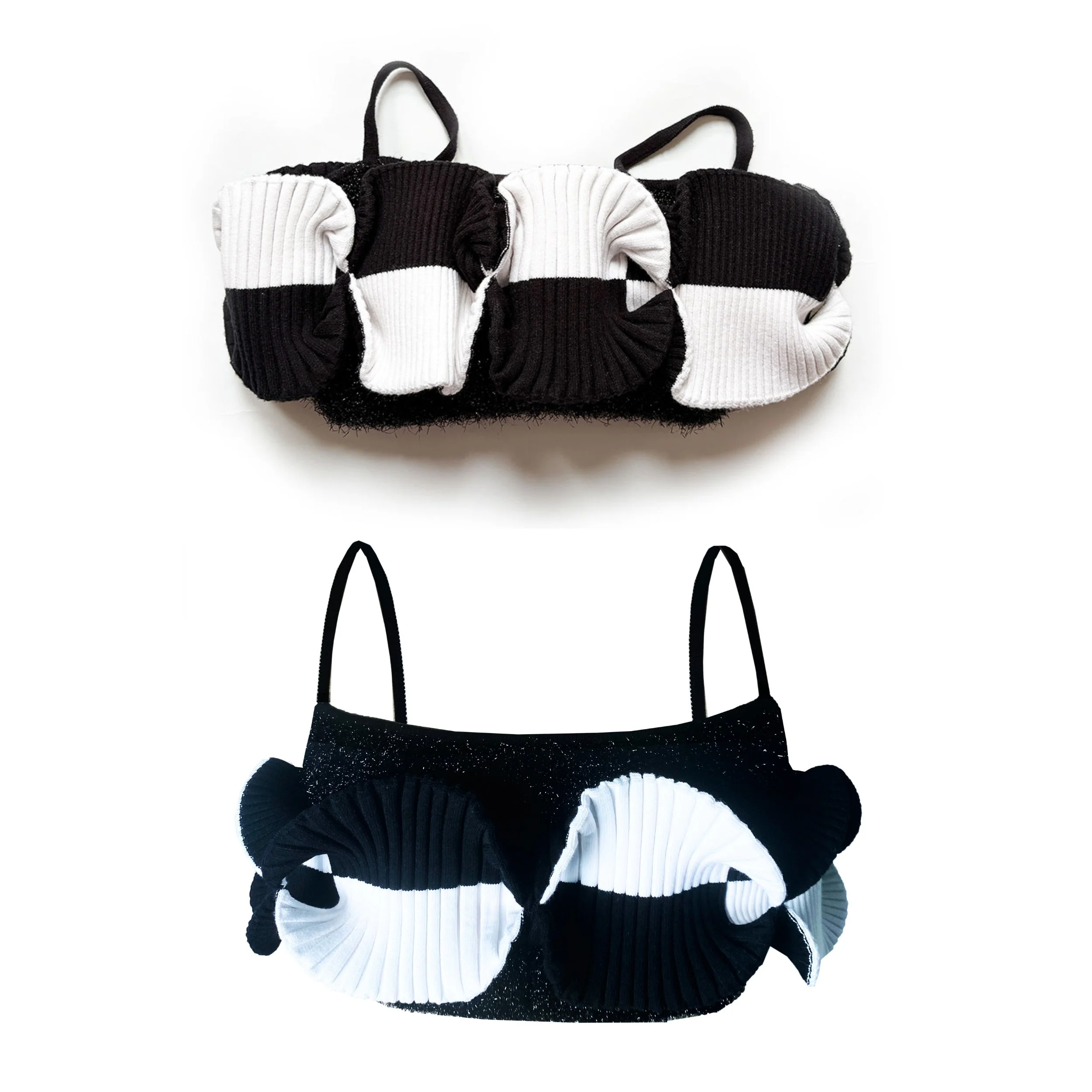
Figure 2.6. Bust prototype studies exploring front-facing volume, symmetrical rib placement, material contrast, and dimensional surface behavior.
Figure 2.7. Final editorial image of EBE-AQUA Original, demonstrating the development from modular rib experiments to a complete body-dimensional knitwear system.
Figure 2.8. Process development of sleevelet and leg components, testing repeated unit scale, vertical placement, color contrast, and linking structure across different body areas.
Figure 2.9. Runway application of EBE-AQUA Original, showing the translation of modular rib structures into wearable bust and sleevelet components.
2. Body-Dimensional Translation and Wearable Prototypes
Following the early modular samples, EBE-AQUA Original was further developed through a series of body-based prototypes across the bust, arms, and legs. These studies apply the same multi-rib construction logic to different body dimensions, testing how repeated rib units can be scaled, positioned, and linked in response to body proportion, movement, and wearability.
Rather than treating the body as a flat pattern surface, this stage approaches it as a three-dimensional site for structural placement. The rib units are arranged through a proportional placement system, where unit size, repetition, linking direction, and material contrast are adjusted according to different areas of the body. Through this process, the textile begins to operate as a flexible modular structure rather than a single decorative surface.
The development process involved research boards, sketch-based planning, technical notes, toile fittings, and repeated prototype testing. The bust pieces explore front-facing volume and symmetrical tension, while the sleevelets and leg pieces test vertical repetition, mobility, compression, and the relationship between soft structure and body movement. These process studies show how the EBE-AQUA construction logic can be translated from individual textile units into wearable components.
Together, the prototypes demonstrate a progression from modular knit samples to a broader dimensional knitwear system. The final pieces retain the sculptural quality of the early samples while becoming more directly connected to the body, suggesting future possibilities for body-centered design, wearable soft structures, and material-led product development.

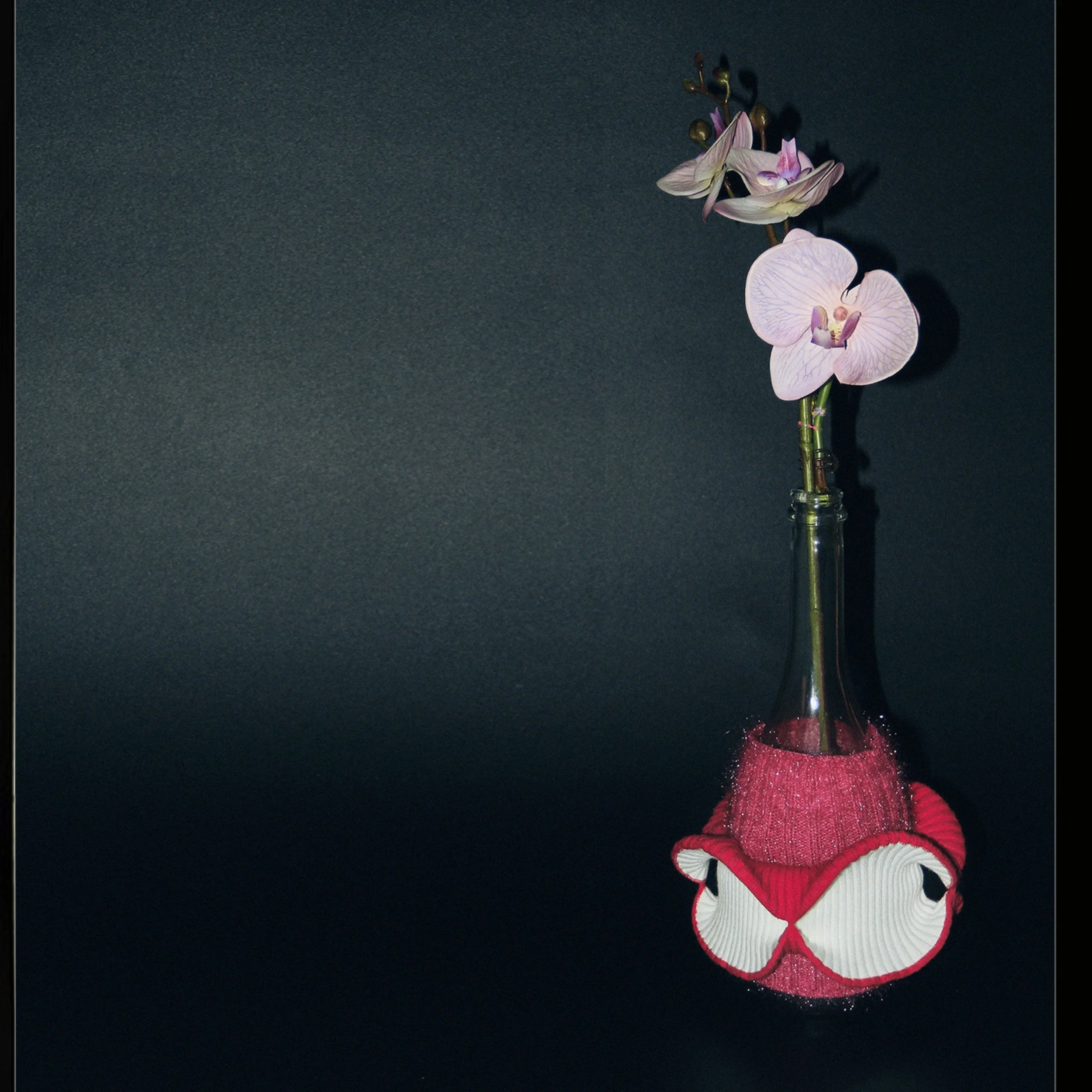
Figures 3.1–3.2. Object-based installation studies extending the EBE-AQUA rib construction logic beyond the body. Through interaction with botanical forms and a glass vessel, the dimensional knit units are tested as soft modular structures that can frame, wrap, support, and transform existing objects within a spatial context.